
You look at an old photo and notice your teeth used to look brighter. Or one front tooth chipped years ago, and it still bugs you every time you smile.
Teeth whitening and porcelain veneers fix different problems. Whitening lightens the color of your natural teeth and works best on surface stains. Veneers are thin ceramic shells that cover the front of a tooth, so they can change color, shape, and small gaps at once. Your stains, your budget, and how much change you want will point you to one or the other.
At Robeck Dental in Omak, Dr. Troy Robeck, DDS, handles cosmetic and restorative care in the office. That means you can weigh either treatment without a referral to a bigger city.
What to weigh before you pick one
- Whitening lightens natural teeth by a few shades and lasts about one to three years.
- Veneers cover the tooth and can last about 10 to 15 years with good care.
- Whitening only changes color. It cannot fix a chip, gap, or crooked tooth, but veneers can.
- Whitening does not lighten crowns, fillings, or old veneers, so mixed color can look uneven.
- Not sure which you need? Book a cosmetic consult at Robeck Dental in Omak.
Which one fits your smile goal?
Pick whitening if your teeth are healthy and your main issue is yellow or dull color from coffee, tea, wine, or age. Pick veneers if you also want to fix chips, small gaps, worn edges, or a tooth that resists whitening. Whitening is the smaller, cheaper step. Veneers are the bigger change that lasts longer.
Here is a quick self-check. Stand at the mirror and name what bothers you. If the answer is only the color, whitening usually solves it. If you point to the shape of a tooth, a chip, or a gap, then color is not your real problem, and whitening alone will leave you let down.
Age and expectations matter too. Younger teeth often brighten more easily, since deep stains have had less time to set. Whatever your age, a dentist can tell you what a realistic result looks like before you spend a dollar.
How does teeth whitening actually work?
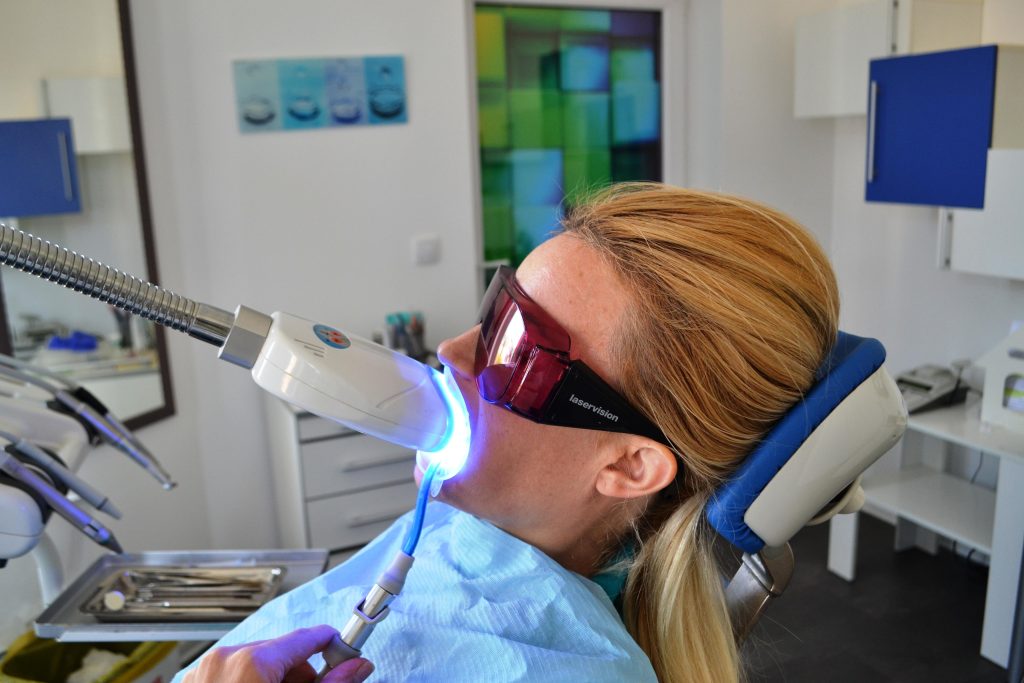
Professional whitening uses a peroxide gel that breaks down stains inside your enamel. An in-office visit can lighten teeth by several shades in about an hour. The American Dental Association notes that whitening works on natural teeth only, not on crowns, fillings, or veneers. Results usually hold for one to three years, depending on your habits.
Whitening works best on extrinsic stains, the surface kind from coffee, tea, red wine, and tobacco. The Journal of the American Dental Association groups tooth stains into two types: extrinsic on the surface, and intrinsic deep inside the tooth. Deep intrinsic stains from certain medicines, injury, or aging often will not lift, even with strong professional gel.
You have more than one professional path. An in-office visit changes the shade quickly, often in one appointment. Dentist-supplied take-home trays work more slowly, over a week or two, but let you top up at home later. Both use stronger gel than store shelves carry, and both come with a dentist checking your teeth first.
Some people feel short-term tooth sensitivity after professional teeth whitening. The American Dental Association lists this as the most common side effect, and it usually fades within a few days. Your dentist can adjust the gel strength to keep you comfortable, which is one reason a supervised treatment beats a random drugstore kit.
What porcelain veneers can and cannot do
Porcelain veneers are thin ceramic shells bonded to the front of your teeth. They can change color, shape, and length and can close small gaps in one plan. The American Dental Association says veneers can improve teeth that are stained, chipped, or misshapen. To fit them, the dentist removes a thin layer of enamel, so the change is permanent.
Veneers usually take two visits over a few weeks. At the first visit, the dentist shapes the teeth and takes an impression. A lab builds your custom shells, and the dentist bonds them at the second visit. With good care, porcelain veneers last about 10 to 15 years before they need replacing.
There are limits. Veneers cover the front of a tooth, not the whole tooth. When a tooth is badly cracked or holds a large old filling, a porcelain crown often makes a stronger fix, since it wraps the entire tooth. If whitening will not reach a deep stain and the tooth is otherwise sound, a veneer is usually the better call than a crown.
Are you a candidate for whitening or veneers?
Whitening suits most healthy mouths, while veneers ask for a bit more. You need healthy gums and enough enamel for a veneer to bond well. Neither treatment goes ahead until any decay or gum problem is treated first. A short exam settles this fast.
A few things rule people out or change the plan:
- Active gum disease or untreated decay needs care before any cosmetic work.
- Heavy night grinding can crack porcelain, so you may need a night guard first.
- Very thin enamel may not support a veneer, which points you toward other options.
- Deep intrinsic stains resist whitening, so veneers become the practical choice.
Pregnancy is another reason to wait on elective whitening, since the safety of bleaching gels during pregnancy is not well studied. When in doubt, ask. The point of a consult is to match the treatment to your teeth, not to sell you the bigger one.
Veneers vs. whitening, side by side
The quickest way to see the difference is to line the two treatments up. Use this as a starting point, then check the details against your own teeth with a dentist.
| Factor | Teeth whitening | Porcelain veneers |
| What it changes | Color only | Color, shape, length, small gaps |
| Fixes chips or gaps | No | Yes |
| How long it lasts | About 1 to 3 years | About 10 to 15 years |
| Reversible | Yes | No, enamel is removed |
| Typical visits | 1 visit | 2 visits over a few weeks |
| Works on crowns or fillings | No | Not applicable |
| Upfront cost | Lower | Higher, priced per tooth |
The table makes the trade clear. Whitening is fast, low cost, and reversible, but it only touches color and fades in a few years. Veneers cost more and change the tooth for good, yet they fix shape and color together and hold their look far longer. Neither is the right answer for everyone. The right answer depends on what you see in the mirror.
What does each option cost?
Cosmetic dental work rarely gets insurance coverage, since it counts as elective. Professional whitening in the United States often runs about $300 to $800. Porcelain veneers usually cost about $800 to $2,500 per tooth, and most people veneer several front teeth at once. Your exact price depends on your teeth, so ask for a written quote.
At-home kits look cheaper, often $20 to $200, but they use weaker gel and take longer to show a smaller result. A professional treatment costs more up front because the gel is stronger and a trained team watches your gums and sensitivity along the way.
Cost over time matters as well. Whitening is cheaper at first but needs a touch-up every year or two. Veneers cost more at the start and hold their color for years. Neither number tells the whole story until you know how many teeth you are treating.
Robeck Dental offers financing through Cherry, with no hard credit check and terms up to 60 months, plus CareCredit as a second option. Patients who pay in full with cash or check at the time of service get a 5 percent discount. The team reviews cosmetic dentistry costs with you before any treatment starts, so there are no surprises.
Can you do both?
Yes, and many people do. If you want veneers on your front teeth, whitening the rest of your natural teeth first helps the shades match. The dentist picks the veneer color after your natural teeth reach their brightest point. Whitening cannot change a veneer later, so the order matters.
A common plan is to whiten first, then veneer only the teeth that still need shape or gap work. This keeps your natural teeth in the mix and lowers how many veneers you pay for. For some people, a mix of whitening, a veneer or two, and bonding on a small chip gets there for less than a full set of veneers.
Getting a cosmetic consult in Omak
You do not have to drive to Wenatchee or Spokane to weigh these options. Robeck Dental has cared for Okanogan Valley families since 1965, and Dr. Troy Robeck, DDS, offers both whitening and veneers right in the Omak office. A consult starts with a look at your teeth, a talk about your goals, and a clear cost estimate.
You do not need to decide anything at the visit. Bring your questions and, if you have one, a photo of a smile you like. The goal is a plan that fits your teeth and your budget, whether that turns out to be a single whitening session, a few veneers, or a mix of both over time.
Ready for a brighter or more even smile? Call Robeck Dental at (509) 826-4050 or book a cosmetic consult through the website. The office is open Monday through Thursday, 8:00 a.m. to 5:00 p.m.